Tulane Maritime Law Journal
Tulane Law School
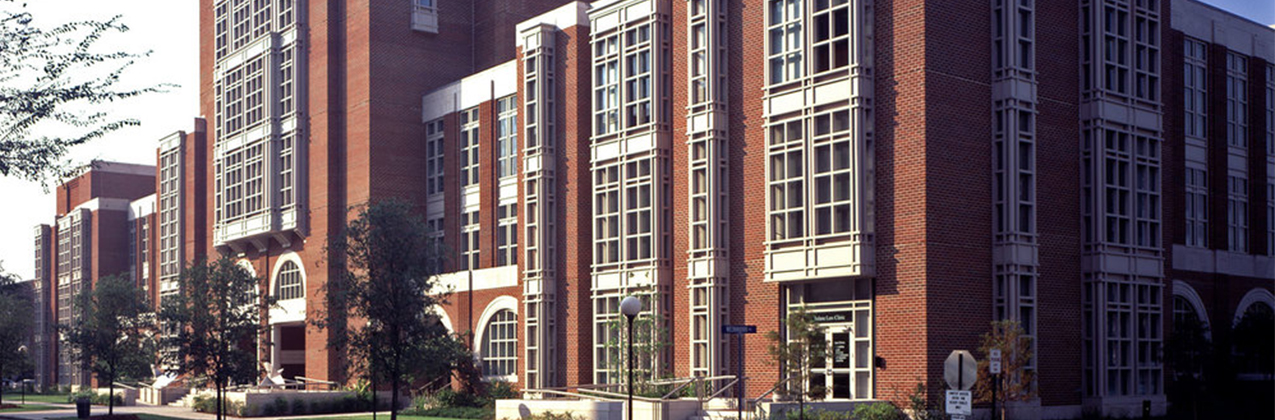
John Giffen Weinmann Hall
6329 Freret Street
New Orleans, Louisiana 70118
(p) 504.865.5959
(f) 504.862.8878
|
|
|
|
The Tulane Maritime Law Journal is the preeminent student-edited law journal in the field of Admiralty and Maritime Law. Published semi-annually, each issue of the Journal includes scholarly works written by academics, practitioners, and students concerning current topics in Admiralty and Maritime Law. In addition, the Journal publishes annual sections in Recent Developments and International Law for the United States and the international community, as well as periodic symposia on relevant topical areas in the field and quantum and collision surveys every other year.
If you are not yet a subscriber of the Journal, please browse the information on our site. Follow the relevant links on this site for more information on the Journal, subscriptions, submissions, and our editorial staff.
Tulane Maritime Law Journal John Giffen Weinmann Hall Tulane Law School 6329 Freret Street New Orleans, Louisiana 70118-6231 |
tel. 504.865.5959 fax 504.862.8878 |
Editor in Chief Scott Reid |
Article Submissions Lynn Becnel |
Subscriptions / Questions Nicholas Foster |
|
|
Permanent linkLarry Kiern, a partner in Winston & Strawn's Washington, D.C. office who concentrates his practice on maritime and admiralty law, has been named a "2012 Distinguished Legal Writing Award" recipient by the Burton Awards for Legal Achievement. This honor is dedicated to rewarding great achievements in law, with a special emphasis on writing and reform. Only 35 authors are selected from entries submitted by the nation's 1,000 largest law firms.
Mr. Kiern's winning article, "Liability, Compensation, and Financial Responsibility Under the Oil Pollution Act of 1990: A Review of the Second Decade," is an analysis of key aspects of the Oil Pollution Act of 1990 (OPA90) and was published in the Tulane Maritime Law Journal (36 TUL. MAR. L.J.1 (2011)). This is his second analysis of OPA90; Mr. Kiern previously published a review of OPA90's first decade entitled, "Liability, Compensation, and Financial Responsibility Under the Oil Pollution Act of 1990: A Review of the First Decade," for Tulane Maritime Law Journal in the Spring of 2000.
An awards ceremony will be held on June 11, 2012 at the Jefferson Building of the Library of Congress in Washington, DC.
For more information, please find the attached press release from The Burton Awards or contact award recipient Larry Kiern at LKiern@winston.com. Permanent linkLast week USDC Judge Barbier issued the first set of rulings in the Deepwater Horizon Case. Judge Barbier dismissed a group of the claims against BP. The claims dismissed were mostly comprised of environmental groups who were not seeking monetary damages.
The journal will be following the case and frequently posting tidbits as rulings come down.
TMLJ Alumni, Ian Taylor, with Lewis, Kullman, Sterbcow, & Abramson, has been working on this case! This is an exciting opportunity, and the journal is proud to see their alumni doing great things! Permanent linkA railroad employee filed a negligence action against his employer under FELA. The employee was injured while engaging in switching the rail carts, and claimed 1) his employer required him to utilize unsafe switching equipment, and 2) his employer failed to properly train him to use the equipment.
In a 5-4 decision, the Supreme Court of the United states held: the appropriate standard for establishing liability under FELA is whether or not the railroad's negligence played a party in bringing about the injury, not the common-law proximate cause standard for negligence.
For the full opinion, please visit: http://www.supremecourt.gov/opinions/10pdf/10-235.pdf Permanent linkThe Carnival Splendor (a 952-foot Panamanian-flagged ship
carrying 3,299 guests and 1,167 crew members) is currently stranded 130 miles of
the coast of Mexico after losing power.
The vessel lost power at approximately 6:00 a.m. Monday,
November 8, 2010, following a fire in its aft engine room. The blaze was extinguished without
injury to passengers or crew. However, engineers have not been able to restore
power to the ship, which has been operating on auxiliary generators since the
fire. Several key hotel systems,
including air conditioning, hot food service and telephones remain out of
service.
At the request of the U.S. Coast Guard in San Diego, the
Navy diverted the U.S.S. Ronald Reagan from training maneuvers to assist the
Carnival Splendor. Earlier
Tuesday, the aircraft carrier was receiving by airlift thirty-five pallets (containing
10,000 pounds of food and supplies) for the cruise ship, with which it is
scheduled to rendezvous Tuesday afternoon.
Additionally, tugboats are en route to the ship to tow the
vessel the 130 miles to Ensenada, Mexico and are expected to arrive sometime
Tuesday.
Permanent linkAccording to a letter Thursday from Fred Bartlit, Jr., the
lead investigator for a federal probe of the Gulf oil disaster, BP and Halliburton
knew of potential flaws in the cement slurry used to reinforce the oil well
below the Deepwater Horizon rig before it exploded on April 20, 2010.
The letter, to the National Commission on the BP Deepwater
Horizon Oil Spill and Offshore Drilling, said that tests in February on a
cement slurry similar to what was used on the Macondo well showed instability
-- and that both companies had the data.
The news caused Halliburton stock to drop in value by almost 8 percent
by the end of trading Thursday, to $31.68 a share.
Bartlit emphasized in his letter that cementing failures are
a known hazard in the oil industry, with specific tests such as a
"negative pressure test" and "cement evaluation logs"
designed to identify cementing problems. However, he wrote, workers at BP and
possibly the company that operated the Deepwater Horizon rig, Transocean,
"misinterpreted or chose not to conduct such tests at the Macondo well."
A commission hearing on the disaster is scheduled for
November 9, but Bartlit's letter said he was notifying the commission about the
cement slurry issue immediately in order to "facilitate [its]
consideration of their implications for offshore drilling safety."
Permanent linkRussia's state-run United Shipbuilding Corporation (USC) may
sell 20 to 30 percent of its shares in an initial public offering in 2013, according
to USC President Roman Trotsenko. Russia accounts for approximately only 0.4
percent of global civilian shipbuilding and slightly over three percent in
military shipbuilding, and USC is currently engaged in exclusively military production. However,
USC has announced plans to move towards added civilian output in the
future in an attempt to create a Russian corporation analogous to the American shipbuilder Northrup
Grumman. In addition to its
potential IPO, USC is currently in the process of valuing the shipbuilding assets
of United Industrial Corporation with an eye towards purchasing those assets. Permanent linkA Somali pirate who pleaded guilty to charges that he and
three other men hijacked a U.S.-flagged vessel off the coast of Somalia and
took hostage its captain. That
man, Abduwali Abdukhadir, will be sentenced Today, Tuesday, October 19, 2010.
Prosecutors say that Muse acted as the ringleader when he
and this three cohorts seized the U.S.-flagged Maersk Alabama by force about
350 miles off the coast of Somalia on April 8, 2009. Once on board, the armed men demanded the ship be stopped,
then abducted and held the captain of the ship, Richard Phillips, hostage on a
lifeboat for four days. The USS Bainbridge, a U.S. Navy destroyer, came to the
assistance of the vessel, and in radio communications, the pirates threatened
to kill Phillips if they were not guaranteed safe passage away from the scene,
authorities have said. Four days
after the hijacking began, Muse boarded the Bainbridge and demanded safe
passage for himself and the others in exchange for Phillips' release, according
to a criminal complaint. According
to authorities, Muse was then taken into custody, and while he was away from
the lifeboat, Navy SEALs shot and killed the three remaining pirates.
During his plea on May 18, 2009, Muse apologized for his
actions and blamed the incident on the Somali government. "What we did was wrong. I am very
sorry for all of this," Muse said. "All of this happened because of
the government in Somalia," he added. In addition to the Maersk Alabama, Muse was charged with
participating in the hijacking of two other vessels in late March and early
April of 2009. Muse told the court
that he and the three other men had agreed to "capture any ship that came
by." He added that he did not
recognize the U.S. flag on the Maersk Alabama.
Muse could receive a maximum sentence of almost 34 years
behind bars.
|
|
|