

Tulane Law School
home


Tulane Maritime Law Journal
Tulane Law School
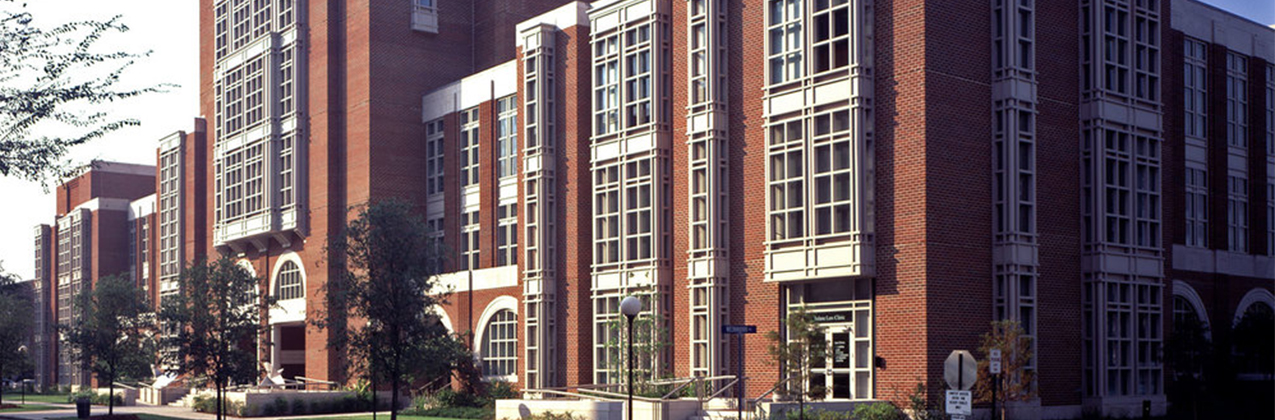
John Giffen Weinmann Hall
6329 Freret Street
New Orleans, Louisiana 70118
(p) 504.865.5959
(f) 504.862.8878


Tulane Maritime Law Journal

The Tulane Maritime Law Journal is the preeminent student-edited law journal in the field of Admiralty and Maritime Law. Published semi-annually, each issue of the Journal includes scholarly works written by academics, practitioners, and students concerning current topics in Admiralty and Maritime Law. In addition, the Journal publishes annual sections in Recent Developments and International Law for the United States and the international community, as well as periodic symposia on relevant topical areas in the field and quantum and collision surveys every other year.

If you are not yet a subscriber of the Journal, please browse the information on our site. Follow the relevant links on this site for more information on the Journal, subscriptions, submissions, and our editorial staff.


Tulane Maritime Law Journal
John Giffen Weinmann Hall
Tulane Law School
6329 Freret Street
New Orleans, Louisiana 70118-6231
 
tel. 504.865.5959
fax 504.862.8878
 
Editor in Chief
 Scott Reid 
Article Submissions
Lynn Becnel 
Subscriptions / Questions
 Nicholas Foster 


Tulane Maritime Law Journal Updates

New evidence that BP and Halliburton knew of flaws in cement in Macondo well

 Permanent link

According to a letter Thursday from Fred Bartlit, Jr., the lead investigator for a federal probe of the Gulf oil disaster, BP and Halliburton knew of potential flaws in the cement slurry used to reinforce the oil well below the Deepwater Horizon rig before it exploded on April 20, 2010. 

The letter, to the National Commission on the BP Deepwater Horizon Oil Spill and Offshore Drilling, said that tests in February on a cement slurry similar to what was used on the Macondo well showed instability -- and that both companies had the data.  The news caused Halliburton stock to drop in value by almost 8 percent by the end of trading Thursday, to $31.68 a share. 

Bartlit emphasized in his letter that cementing failures are a known hazard in the oil industry, with specific tests such as a "negative pressure test" and "cement evaluation logs" designed to identify cementing problems. However, he wrote, workers at BP and possibly the company that operated the Deepwater Horizon rig, Transocean, "misinterpreted or chose not to conduct such tests at the Macondo well."

A commission hearing on the disaster is scheduled for November 9, but Bartlit's letter said he was notifying the commission about the cement slurry issue immediately in order to "facilitate [its] consideration of their implications for offshore drilling safety."


APPLY CONTACT TLS INTRANET CALENDAR SEARCH:
 
©Tulane University Law School | Weinmann Hall | 6329 Freret Street | New Orleans, LA 70118 | 504.865.5939    Privacy Policy
Tulane University Home
 
admin login