

Panels
Low Wages,
High Gains: The Case For Keeping Illegal Immigrants Illegal
This panel will look in to the legal and political
reasons to limit access to citizenship to Latin American immigrants. The main
focus of the panel will be the argument in favor of the preservation of the
“status cuo” regarding illegal immigrants rights as a means to provide American
employers with low-wage workers that do not represent a burden to state and
federal aid programs.
The panel
seeks to deconstruct the misconceptions that create this argument and will
provide an overview of the economic and legal effects that undocumented
immigration has on the United States. Moreover the panel will provide
alternatives to the current immigration legal structure that integrate and benefit
from the influx of these workers. Finally this panel will look to the future of
immigration policy in the United States and the challenges that might be faced
by future generations as a result of maintaining the current policies regarding
undocumented immigrants.
Speakers and Topics:
Luz M. Molina:
“Keeping illegal immigrants illegal-Overview of Employment practices regarding
undocumented immigrants”
Ramona
Fernandez: “Legal Rights afforded to immigrants under U.S. and Louisiana Laws”
Jimmy Huck:
Recent history and status of anti-undocumented immigration legislation in the
State of Louisiana
Too Much Of A
Minority: Latin Women In The Affirmative Action Era
Latinos continually are asked and encouraged to
give information about their ethnicity. In an era were “diversity” is seen as
an attractive company policy, Latin women are seen as the perfect double
minority.
This panel will reflect on the history and context
of affirmative action towards the community of Latinas and the effects that it
has had in putting Latinas in positions of power. Moreover, this panel will
explore the possible backlash against Latinas by creating a double minority
that might reinforce gender stereotypes and may provoke questions of merit
towards this community. This in an effort to understand and improve affirmative
action programs and raise questions about the necessity of these programs in
this day and age.
Speakers and
Topics:
Vivian de las
Cuevas-Diaz- “Latinas in the Private Sector”
María Pabón
López- “Latinas in Academia”
M. Isabel
Medina- “Gender, Immigration and Constitutional Law”
Lt. Catherine Chiappetta- "A Latino advocate in the Armed Forces"
Food For
Thought: Legal Challenges For Latino Entrepreneurship
Latinos come
to the United States of America with big dreams. The come ready to work and
they strive to build businesses that bring a piece of their country to the
United States.
This panel
will seek to inquire on the many hurdles that Latinos confront when they choose
to pursue a business endeavor in The United States. To do this we will have
three panelists that will give the audience their own experience as
entrepreneurs and leaders of the Latino community. These panelists will talk about legal, cultural and
governmental challenges that are faced by Latinos entrepreneurs throughout the
country.
Speakers and Topics:
Darlene A. Kattan: “Una Latina en New
Orleans”
Peter L. Cedeño- “Un Latino en Nueva York”
Carlos Adame- “Un Latino desde New Orleans hasta
Latinoamerica”
To live the
American Dream: Young Latinos and the Dream Act
Some Latinos are too small to understand what it
means to cross the border. They come with their families looking to live the
American Dream and are forced out without regard to the ties they have made
with friends, the education that was being given, and the overall effect that
this expulsion would have on well being of the child.
This panel will reflect on the psychological and
legal effects that the immigration system imposes on Latin minors. Moreover,
this panel will discuss the Dream Act and how it provides hard working young
Latinos a way to stay in the United States and pursue the American Dream. This
in turn will require our panelist to inquire on the motivations that have
stalled the efforts to enact this legislation and the battles that lay ahead
regarding the protection of young undocumented immigrants.
Speakers and Topics:
Thomas Saenz: “The fight for the Dream”
Josh Bernstein: “To Envision the Dream”
Geoffrey Hoffman: “A Dream cut short”
Jose Torres-Don: “The DREAmer”
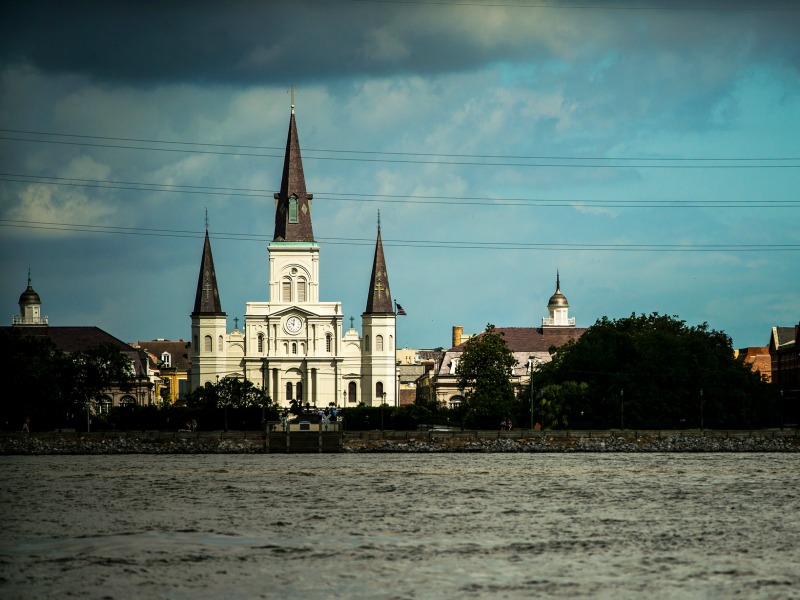
Rebuilding New
Orleans: The Latino Community and the Post-Katrina Reconstruction Effort
Recent polls suggest that the Latino community has
grown exponentially since hurricane Katrina. Latinos have been active in the
post-Katrina reconstruction efforts and have filled the gap that was left by
the many New Orleanians that never returned.
This panel will look at how this new rising
minority has responded to the legal and cultural differences that come with
migrating to a new home. These challenges go from animosity towards the new
neighbors to the legal and governmental responses to the new community. More
importantly, these challenges represent an example of the struggles that the
Latino community has had throughout the country to find a voice and a home.
Speakers and Topics:
Vanessa Spinazola: “Protecting immigrant rights in
New Orleans”
Donna Santiago: “The new Latin sound of NOLA”
Mitchell F. Crusto: “Southern Hospitality:
Latinos in New Orleans after the Storm”
The View From
Up There: Latino Judges in the American Court System
Latin American judges serving in United States
Courts have a unique point of view and an important role in the Latino
community. The number of Latino judges is relatively small and the need for a
representative judiciary raises important questions about what should be looked
at when appointing new judges.
This panel will give the audience chance hear about
the experiences, the challenges and the responsibilities that come from being a
Latino in a robe for a United States Court. Moreover, this panel will discuss
the ways in which the United States judiciary can be given a Latino voice that
is proportional to the number of Latinos living in the United States.
Speakers and Topics:
Justice
Eva Guzmán: “A Latina in the highest court of the Lone Star State”
Judge Gloria M. Navarro- “The first Latina federal
judge in the District of Nevada”
Puerto Rico: A Nation without a voice and a State without
representation
Puerto Rico,
the island of enchantment is also an island that is plagued by more that 100
years of looking for an identity. An identity that is defined by its Spanish
roots and the effects of the 1898 American occupation, an identity that mixes
its Latin sounds and Spanish language with the overwhelming presence of
American corporations and radio stations playing rock and roll.
In 1952 this identity was defined as a
free-associated state, a mixture of autonomy and dependence that can best be
described as an “arroz con pollo” (rice with chicken), which denotes the
unclearness of this definition. For many, in 1952 the issue was resolved with
the enactment of the new constitution but for others, there are questions of
legitimacy and voluntariness in the process of choosing what would be the
future of Puerto Rico that have lead some to declare Puerto Rico one of the
last colonies of the world.
This panel
will approach the issue of the unresolved status of Puerto Rico. This will be
done by looking at the historical context of the 1952 Constitutional transition
and how it complies with public international law, as well as the
constitutional law of the United States. Finally, the panelist will approach
the issue of identity and integration of the Latin community to the American
way of life and how Puerto Rico represents a failed or successful attempt at
integration.
Speakers and
Topics:
Adeno Addis: “A thin line between States and
Colonies?”
Manuel Rodriguez Orellana- “A Nation without a voice”
Pedro Rosselló Gonzalez- “A State without
representation”
Between the
lines: Introduction to LatCrit Workshop
One year before Latina/o law students
organized the first National Latina/o Law Student Conference, a diverse group
of mostly Latina/o law professors organized the first annual conference of
Latina & Latino Critical Legal Theory ("LatCrit"). Since then,
LatCrit scholars have produced over twenty symposia volumes of critical outsider
jurisprudence, charting a wide-ranging investigation into law, theory and
culture across (and beyond) the Americas.
Over the
years, the NLLSA Conference has invited many scholars who affiliate with
LatCrit to present on their multidimensional inquiries into Latina/o sociolegal
conditions and those of other sociolegal “outsiders.” Guided by our shared
principle of anti-subordination, the ILW will inform students about the origins
and trajectories of LatCrit theory, community and praxis; demonstrate how
critical outsider jurisprudence matters in particular investigations of
international development and comparative, cross-cultural environmental justice
issues in Latin America and the Caribbean; and demonstrate the array of
student-oriented programs and research tools available online at http://www.latcrit.org.
Speakers:
Colin Crawford
Marc-Tizoc González
Francisco Valdes
Diversity in the Legal Profession
It is said the justice system is as just
as the recourses that you have to gain access to it. Lawyers are the doorman’s
of the justice system. Their education provides them the tools that are
necessary to navigate the sea of words and the waves of paperwork that come
with any effort to assure you rights in court.
Diversity in the legal profession means
that those lawyers understand and emphasize with their clients needs. Diversity
also means representation in the justice system and the voice of every
community in the courts of law. This panel will address the issue of diversity
in the legal profession, the impact that it has on clients, on lawyers and on
the law. The panel will also discuss the different aspects of diversity as it
relates to the practice of law, such as in the areas of retention and recruitment,
client development, etc.
Speakers:
Frederick
Rivera
Manuel
Berrelez
Rear Admiral Nanette M. DeRenzi